
Introducton
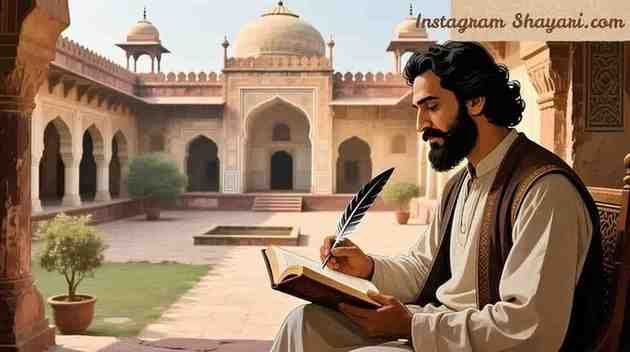
In a world overflowing with fleeting digital messages, status updates, and quickly consumed content, there persists a timeless tradition — Shayari. Shayari is more than mere poetry: it emerges from the heart, capturing momentary glances of love, fleeting sighs of separation, profound reflections on life, or painful outpourings of grief. It’s the whisper of the soul — sometimes gentle, sometimes fierce — expressed in a few lines or couplets, yet resonating for a lifetime.
This article attempts to capture Shayari’s entire spectrum: its origin, evolution, masters, modern reincarnation, and its power to heal souls. Whether you are a reader, a singer of words, a social media sharer, or someone seeking solace — you will find within this article a rich trove of what Shayari is, where it came from, why it matters, and how it still speaks to millions worldwide.
What Is Shayari?
At its core, Shayari refers to a form of poetic expression rooted in emotion, rhythm, and metaphor. Unlike plain prose that conveys information or narrative directly, Shayari speaks the language of feelings — love, longing, despair, joy, hope, introspection — often using imagery, symbolism, and rhythmic cadence. Let’s break down its fundamental characteristics:
- Emotion-first: Every Shayari is driven by feeling. Whether love, heartbreak, nostalgia, or spiritual longing — emotion sets the tone.
- Concise yet profound: Many Shayari couplets are short — just two or four lines — but they carry deep layers of meaning.
- Musicality: Even when written, Shayari often carries meters or rhythmic patterns; when recited, it becomes almost musical.
- Metaphor and symbolism: Shayari rarely states directly “I am sad” or “I love you”; instead, it evokes images — a dark night, a lonely lamp, a silent tear — to convey deeper meaning.
- Universality through specificity: A good Shayari may reference a droplet of rain, a wilted flower, or a moonlit night — particular images. Yet, the feelings they evoke (loneliness, love, hope) are universal.
Importantly, although Shayari is often associated with Urdu or Hindi, the concept — poetic, emotional, rhythmic expression — transcends language. In that sense, Shakespeare’s sonnets, Japanese haiku, Persian qasida — all share spiritual kinship with Shayari. However, “Shayari” as a term and tradition has its own lineage, linguistic flavor, and cultural milieu, which we explore next.

Types of Shayari
Love Shayari expresses pure emotions, affection, and heartfelt feelings. It beautifully captures the magic of true love. In our InstagramShayari, you can find different type of shayari as like as:
Romantic Shayari 💖
Romantic Shayari creates a dreamy and intimate vibe. It reflects soft emotions and the warmth of being in love.
Sad Shayari 😪
Sad Shayari shares pain, heartbreak, and loneliness. It connects deeply with people going through emotional struggles.
Heart-Touching Shayari 💞
This type touches the soul and leaves a strong emotional impact. It highlights simple yet powerful feelings.
Attitude Shayari 😎
Attitude Shayari reflects boldness, strength, and confidence. It shows a fearless personality through sharp and powerful lines.
Motivational Shayari 🚀
Motivational Shayari encourages people to stay strong during challenges. It boosts courage, hope, and positivity.
Friendship Shayari 🤝
Friendship Shayari celebrates true friends, memories, and loyalty. It reminds us how special real bonds are.
Funny / Meme Shayari 😂
Funny Shayari adds humor, fun, and entertainment. Perfect for making others smile on social media.
Breakup Shayari 😢
Breakup Shayari expresses the pain of separation and emotional healing. It reflects the struggle of moving on.
Zindagi (Life) Shayari 🌿
Life Shayari talks about real experiences, lessons, and truths. It helps readers understand the deeper meaning of life.
Bewafa Shayari 🥀
Bewafa Shayari reveals the pain of betrayal and broken trust. It expresses the sadness left behind by false love.
Emotional Shayari 💗
Emotional Shayari highlights deep inner feelings. It touches themes like hope, fear, memories, and love.
Romantic Couple Shayari 💑
This type represents the sweet bond between couples. It shows trust, understanding, and heartfelt love.
Festival Shayari 🎉
Festival Shayari spreads joy, blessings, and festive vibes. It adds warmth to celebrations.
Birthday Shayari 🎂
Birthday Shayari expresses love, blessings, and special wishes. It makes someone’s day more memorable.
Islamic / Spiritual Shayari ☪️
Spiritual Shayari expresses peace, faith, and devotion. It brings comfort and a sense of calmness.
Royal / Attitude Shayari 👑
Royal Shayari reflects power, pride, and a strong personality. It highlights a bold and confident identity.
Origins and Cultural Roots: Where Did Shayari Come From?
The roots of Shayari stretch over centuries, crossing geographies, languages, and cultures. The path can be traced roughly as follows:
- Ancient Persia & Arabic Poetry
- Long before “Shayari” as a term existed, there was Persian and Arabic poetry, rich in ghazals, qasidas, lyrical odes, and spiritual verses. Poets like Rumi, Hafez, and others explored divine love, human love, existential longings, and spiritual metaphors. Their influence traversed deserts and mountains, reaching South Asia.
- The Persian poetic tradition prized metaphors, mystical imagery, and refined diction — traits that would shape Shayari’s aesthetic.
- Cultural Synthesis in South Asia
- From the 12th century onward, with the arrival of Sufi mystics, travelers, and traders from Persia, Arabic and Persian literary traditions mingled with the local languages (like Persian, Prakrit, early Hindi, later Urdu).
- Over time, this blending gave rise to a culturally unique poetic tradition: poets began writing in Urdu, Hindustani, and regional dialects — yet retaining the lyrical and metaphorical flavor of Persian poetry.
- Emergence of Mughal‑era Courts and Mushairas
- During the Mughal era (16th‑18th centuries approximately), royal courts patronised poets, scholars, and artists. Poetry was an elite artform; gatherings known as mushairas (poetic assemblies) became social events, where poets recited verses and earned recognition.
- Mushairas were instrumental in formalising Shayari — giving structure, encouraging refinement, and popularising poetic conventions among the urban literate class.
Thus, Shayari emerged from a synergy: ancient Persian/Arabic lyricism + South Asian linguistic and cultural milieu + patronage and public recitation. Over centuries, it became rooted — not as an import — but as a living tradition: Indian/Pakistani Urdu‑Hindi Shayari, enriched with locality, emotion, and social context.
Evolution & History of Shayari — A Timeline
Below is a broad, simplified timeline of Shayari’s evolution:
| Era / Period | Key Developments | Significance |
| Pre‑Mughal (before 15th c.) | Spread of Persian/Arabic poetic works through Sufis, traders, scholars. Early translations & hybrid poems. | Foundation of thematic, metaphorical, mystical poetry in South Asia. |
| Mughal Era (16th–18th c.) | Formalization of poetry; emergence of mushairas; mixing Persian and local dialects; early Urdu/Hindustani verse. | Establishment of courtly poetry tradition and cross-cultural synthesis. |
| Classical Era (18th–19th c.) | Flourishing of poets writing in Urdu/Hindustani — more local idioms, deeper emotional themes, romantic & philosophical ghazals. | Shayari becomes accessible beyond courts — to common Urdu/Hindi speakers. |
| Colonial & Pre‑modern Period (late 19th – early 20th c.) | Publication of poetic collections; printing press spreads works; increased literary exchange across regions; first modern anthologies. | Shayari reaches literate urban middle class; shifts from exclusive to broader audience. |
| Modern/Post-independence Era (20th c.) | Emergence of poets with social‑political themes; Shayari in radio, films; deep romantic, revolutionary, philosophical works. | Shayari adapts to changing times — becomes voice of masses, not just elite. |
| Digital Age (21st c.) | Social media spread (Instagram, Facebook, WhatsApp); Shayari shared via images, reels, status updates; multi‑lingual, global reach. | Shayari becomes global and democratized — anyone, anywhere can read/write/share. |
This timeline helps us see: Shayari was never static. It adapted — taking new forms, reflecting new realities. From royal courts to mobile phones, the soul of Shayari remained — but its appearance changed.
Forms of Shayari
Shayari isn’t monolithic. Over centuries, poets have shaped different forms, each with its rules, flavor, and emotional tone. Here are some of the major forms:
Ghazal
- Perhaps the most iconic form associated with Shayari.
- Consists of rhyming couplets (sher); each couplet (often two‑line) stands independently but shares the same meter (beher) and rhyme/refrain (radīf and qāfiyah).
- Themes: love (both earthly and divine), separation (virah), longing (ishq), melancholy, philosophical musings.
Nazm
- More free‑form than ghazal. Nazm is structured as a poem with theme-based continuity — more like a short poem in modern sense.
- Useful for storytelling, philosophical verses, social commentary, descriptive imagery.
Rubai / Rubaiyat
- Quatrains (four-line verses) — compact and often philosophical.
- Each rubai may stand alone or connect with others; used for wisdom, reflections on life, fate, spirituality.
Qasida and Marsiya
- Longer poetic compositions. Qasida: often eulogistic or panegyric (praising a patron, noble, king). Marsiya: elegiac — lamenting death, usually used for mourning.
- Historically used for courtly praise or religious/mourning contexts.
Modern Visual & Digital Shayari
- In the 21st century, Shayari transcends only written/spoken form — now in visual posts, reels, short videos, status updates.
- Combines image + short lines; sometimes background music; or even spoken‑word videos.
- Themes have expanded: self‑love, mental health, inspiration, existentialism, humor, daily mood, social issues.
These forms show how Shayari adapts — from rigid classical structures to modern free-flowing expressions.
Masters of Shayari — Legendary Poets and Their Legacies
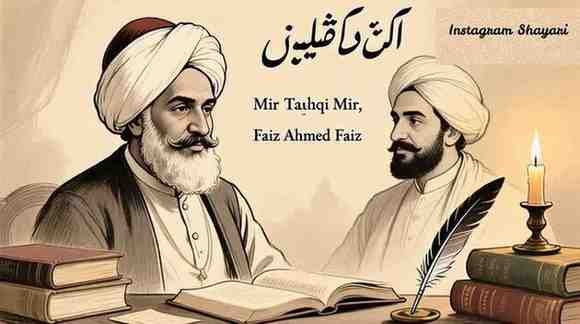
Over centuries, certain poets stood out — not just for their skill, but for their ability to voice unspoken feelings, capture the zeitgeist, or transform poetry’s purpose. Below is a list of some of the most influential Shayari poets, with birth/death years, and a brief account of their contribution.
| Poet (Shayar) | Birth – Death | Short Biography & Contribution |
| Mir Taqi Mir | 1723 – 1810 | One of the earliest masters of Urdu Shayari. Often called the “God of Urdu poetry,” Mir’s ghazals captured raw human emotions — love, heartbreak, existential melancholy — in a language closer to spoken Urdu/Hindustani than arid Persian. His metaphors were simple but soul‑piercing, making Shayari accessible beyond court circles. |
| Mirza Ghalib | 1797 – 1869 | Ghalib is arguably the most celebrated Shayari poet. His metaphysical ghazals combined love and philosophical introspection. He questioned existence, lamented human frailty, explored divine longing — all in urbane wit and lyrical elegance. His couplets remain timeless, recited and loved generations later. |
| Allama Iqbal | 1877 – 1938 | A philosopher‑poet whose Shayari reached beyond romance. Iqbal’s poetry inspired self‑realization, nationalism, spiritual awakening, and youth empowerment. While he wrote in Persian too, his Urdu poetry became a voice of awakening among South Asian Muslims — urging pride, strength, and inner transformation. |
| Faiz Ahmed Faiz | 1911 – 1984 | Faiz blended Shayari with social and political consciousness. His words spoke of love, injustice, freedom, hope, and resistance. In times of tumult — war, repression, partition aftermath — his Shayari became solace for the oppressed and voice of rebellion for the hopeful. |
| Ahmad Faraz | 1931 – 2008 | Faraz rejuvenated romantic Shayari in modern Urdu. His language was simple, relatable, yet deeply poetic. He maintained classical poetic dignity while making his verses resonate with urban youth, often about love, longing, betrayal, and lost dreams. |
| Josh Malihabadi | 1898 – 1982 | Nicknamed the “Shayar‑e‑Inquilab” (Poet of Revolution), Josh used Shayari as a tool against oppression and injustice. His fiery couplets inspired generations, especially during struggles for freedom and social justice. |
| Jaun Elia | 1931 – 2002 | A modern rebel poet, Elia challenged conventions — both in life and poetry. His Shayari conveyed cynicism, solitude, existential angst, love, and disillusionment in modern urban lives. He remains cult among younger generations seeking depth and raw honesty. |
Note: This is not an exhaustive list — many more remarkable poets shaped Shayari’s course. But the names above represent pivotal milestones: the early classical period, philosophical awakening, romantic revival, and socio‑political rebellion.
Observations on These Masters
- Evolution of Language & Themes: From Mir’s melancholy love poems to Ghalib’s existential love and loss to Faiz’s socially conscious poetry — Shayari transformed with society.
- From Elite to Public: Early poets wrote for courts or literate elites; later poets (Iqbal, Faiz, Faraz) wrote for broader audiences, making Shayari a people’s art.
- Flexibility of Shayari: These poets show how Shayari isn’t limited to a single theme — love, heartbreak, justice, resistance, spirituality, nostalgia, hope.
Shayari in the Contemporary World —
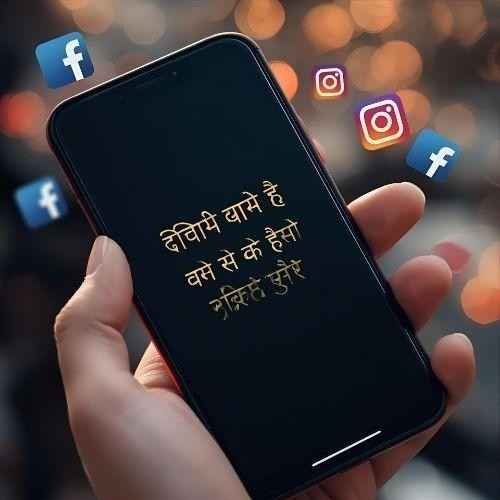
Today’s Shayari lives not on old manuscripts or narrow literary circles — it lives on phones, screens, and social media feeds. The digital era has drastically changed how Shayari is written, shared, and consumed. Below are key aspects of this transformation.
Social Media Platforms & Shayari
- Instagram: Perhaps the most vibrant playground for modern Shayari. People pair short verses with aesthetic images (moody cityscapes, minimalistic art, silhouette of lovers at sunset) to convey emotions. Reels with spoken Shayari over soft music often go viral.
- Facebook: Many still post Shayari as status updates or share write‑ups on their timeline. Shayari circulates in groups, comment threads, and memories — often reaching older demographics.
- WhatsApp: The platform for immediate emotional expression. People share Shayari as status (text or images), send verses to friends, or instantly vent feelings. Shayari sometimes becomes shorthand for moods.
- X (formerly Twitter): Micro‑Shayari — short couplets, half-couplets, or evocative lines — fit perfectly into character limits. Poets and amateurs alike post short bursts of emotions.
- YouTube & Other Video Platforms: Spoken-word performances, recitations, mushaira recordings, animated Shayari videos — bringing Shayari to audiences who may not read Urdu/Hindi but love rhythm, emotion, and visuals.
Impact of Digitisation
- Democratisation of Shayari: In older times, only a few scholarly poets or court-patronised writers could publish. Now — anyone with a smartphone can write, share, receive feedback, and build an audience.
- Cross‑Cultural & Global Reach: Shayari written in Urdu or Hindi may be shared globally; some get translated, others appreciated by people unfamiliar with the language — purely for emotional resonance.
- Fusion with Other Art Forms: Modern Shayari often merges with photography, digital art, music, and short films — making it multi‑sensory. A line of Shayari may evoke more than meaning — ambience, mood, nostalgia.
- Rapid Spread vs. Ephemeral Feel: Whereas classical Shayari was savoured slowly (mushaira, book reading), modern digital Shayari spreads rapidly — but often disappears quickly in busy social feeds. This raises both opportunity and challenge: reach vs. depth.
In short, Shayari has transformed, but its heart remains. Emotion. Expression. Connection.
Why Shayari Still Matters —
Why has Shayari endured for centuries? Why does it still matter, in the age of WhatsApp statuses and Instagram reels? Here are some deep reasons — the timeless values of Shayari.
Emotional Catharsis & Healing
- Articulating the Unsayable: There are feelings — heartbreak, longing, existential dread — that ordinary language fails to express. Shayari gives voice to those.
- Shared humanity: Reading a Shayari about lost love or pain, someone else’s sorrow becomes your own — you find solace knowing you’re not alone.
- Therapeutic release: Many mental‑health professionals acknowledge the healing power of creative expression. Whether reading or writing, Shayari can help process grief, release suppressed emotion, and provide comfort.
Inspiration, Motivation & Life Lessons
Shayari isn’t merely about love or sorrow; it often carries wisdom — about life, self-worth, human dignity, hope, resilience. A few powerful lines can uplift moods, inspire change, or instill inner strength.
Preservation of Culture, Language & Heritage
Through Shayari, the subtleties of Urdu, Hindi, Persian — their metaphors, idioms, cultural references — remain alive. Even in diaspora communities, Shayari helps maintain identity, connect generations, and pass down linguistic heritage.
Social Connection & Empathy
Sharing a Shayari — with a friend, a lover, a family member — can express emotions that are hard to say aloud. A piece of Shayari can become a bridge: between hearts, between generations, between cultures.
Creative Outlet & Intellectual Growth
For writers and readers alike, Shayari stretches imagination. It invites introspection, encourages experimentation with language, metaphor, rhythm. It cultivates sensitivity — towards beauty, pain, love, injustice. In short: Shayari nurtures the soulful mind.
Emotional Power and Benefits of Shayari
Shayari touches the heart in ways ordinary language cannot. Reading or writing Shayari provides emotional release, offering solace in grief, a sense of understanding in loneliness, and inspiration in challenging times. It nurtures empathy, allowing readers to connect with experiences beyond their own. Shayari also preserves cultural and linguistic heritage, fostering pride and continuity. For many, engaging with Shayari is not just literary pleasure — it is a form of mental and emotional nourishment.
Future of Shayari
Shayari continues to evolve, blending tradition with modern technology. Digital platforms allow multi-sensory experiences — recitations, reels, visual storytelling — reaching global audiences. Young poets experiment with language and style, ensuring Shayari remains contemporary while maintaining its emotional and philosophical core. As long as humans seek expression and connection, Shayari will endure.
Some Shayari Examples
Here are some Shayari lines you can share:
“The night whispers secrets only the heart can hear,
and in that silence, love finds its home.”
“Tears fall like silent rain,
washing the sorrows hidden in my chest.”
“Hope is a candle flickering in the darkest storm,
refusing to fade.”
“Words fail, yet poetry speaks,
turning broken moments into eternal echoes.”
“Even in solitude, the heart finds conversations in memories and dreams.”
FAQ
Q1: Is Shayari only about love and heartbreak?
A: No. While love and longing are common themes, Shayari also explores spirituality, philosophy, social issues, humor, and motivation. It is a versatile form expressing any deep emotion.
Q2: Do I need to know Urdu or Persian to enjoy Shayari?
A: Knowing the language enhances nuance, but the emotional essence can be felt even in translation or transliteration. Feeling the words matters more than linguistic precision.
Q3: Can reading or writing Shayari help mental health?
A: Yes. Shayari allows emotional expression and reflection, reducing stress and loneliness. Both writing and reading it can provide mental relief and emotional clarity.
Q4: How is ghazal different from nazm?
A: Ghazals are structured, rhymed couplets with a refrain and meter, each conveying independent meaning. Nazms are continuous poems with narrative or thematic flow, allowing broader storytelling.
Q5: Is Shayari still relevant in the digital age?
A: Absolutely. Digital platforms have made Shayari accessible worldwide, allowing emotional expression and cultural connection while keeping its essence alive.
Q6: How should Shayari be in the present time for sharing on social media?
A: In the present time, Shayari should be short, catchy, and emotionally expressive so people can instantly relate to it. Modern audiences prefer lines that are simple yet impactful, with a touch of real-life feelings. Using clear language, relatable emotions, and a unique style makes the shayari more shareable. Adding emojis, trendy expressions, or a modern tone also helps it perform better on platforms like Instagram, Facebook, and WhatsApp.
Watch a detailed explanation about the history of shayari on YouTube to explore legendary poets and their timeless works.